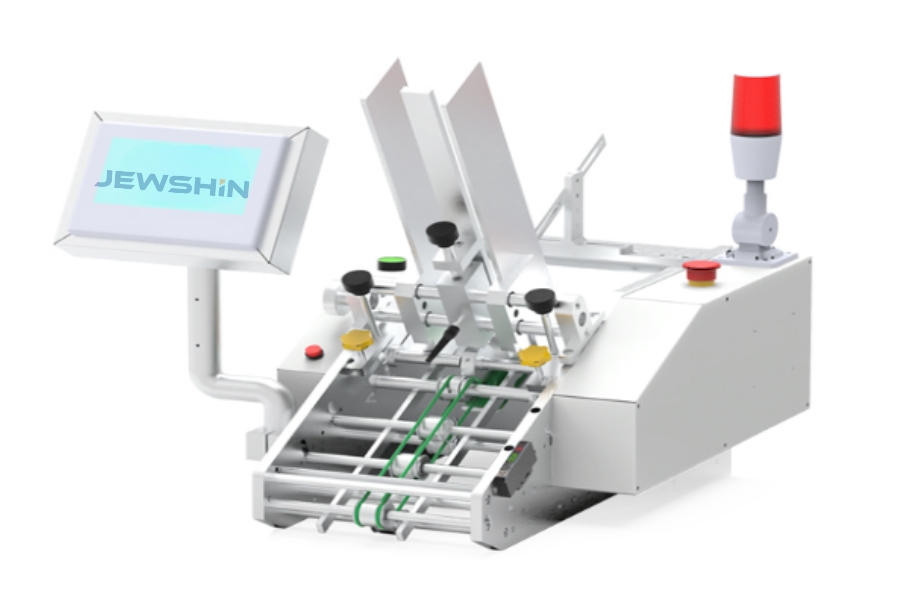
Manufacturers that replace manual or semi-automatic packaging with automated equipment often report measurable gains in production speed, quality consistency, and operating cost control. A packaging line running at 90–180 packs per minute instead of 30–60 can increase daily output by more than 150%, while automated inspection reduces packaging defects to below 0.5% in many applications. Faster changeovers, stable sealing quality, real-time production monitoring, and lower material waste all contribute to higher equipment utilization. JEWSHIN Packaging Machinery provides automated solutions designed to support continuous production, improve packaging accuracy, and reduce unnecessary downtime across multiple manufacturing industries.
Manufacturing companies are under constant pressure to produce more products without increasing factory space or labor costs. According to reports from manufacturing organizations in Europe and North America, labor expenses have continued to rise since 2021, while shorter delivery schedules have become standard across food, pharmaceutical, cosmetic, and consumer goods industries. Packaging is often the final production stage before shipment, so even a short interruption can slow every upstream process. Many factories now review Overall Equipment Effectiveness (OEE) every week because a difference between 65% and 85% utilization can represent thousands of additional finished products over one month.
Production managers therefore pay closer attention to packaging equipment than they did several years ago. A packaging machine is no longer expected to seal products only. It is also expected to communicate with filling systems, conveyors, inspection equipment, warehouse software, and production databases.
A modern packaging line works as one connected production system rather than a collection of independent machines.
Automation changes how operators spend their working hours. Instead of manually filling containers, applying labels, checking sealing quality, and recording production numbers on paper, operators supervise machine performance and respond only when adjustments are required. In factories operating two or three shifts, this approach allows one employee to oversee equipment that previously required three to five workers. Facilities producing over 50,000 packages per day often recover automation investments faster because labor savings continue every production shift.
Packaging speed also has a direct influence on manufacturing capacity. A manual line producing 35 units per minute may satisfy small production volumes, but increasing customer demand usually requires additional operators. An automated packaging system producing 140 units per minute increases throughput without multiplying labor requirements.
| Packaging Method | Typical Output |
|---|---|
| Manual Packaging | 20–40 packs/min |
| Semi-automatic | 40–90 packs/min |
| Fully automatic | 100–250+ packs/min |
Higher production speed must also remain stable throughout long operating periods. Machines designed for continuous production frequently operate 16–24 hours each day with scheduled maintenance instead of repeated manual adjustments. Stable performance becomes increasingly important during seasonal demand, when manufacturers may increase production by 30% or more within several weeks.
Greater production volume creates another requirement: maintaining consistent package quality. Customers immediately notice leaking pouches, damaged cartons, incorrect labels, or uneven sealing. In regulated industries such as pharmaceuticals and food processing, packaging defects may also result in rejected batches or additional inspection costs.
Automated control systems maintain filling accuracy, sealing temperature, pressure, cutting position, and labeling alignment with repeatable precision. Many servo-controlled packaging systems maintain filling deviations below ±1%, depending on product characteristics and production conditions. That level of consistency reduces product waste while improving customer satisfaction over long production runs.
As packaging quality becomes more consistent, manufacturers begin measuring another performance indicator: material consumption. Packaging materials represent a noticeable portion of production cost, particularly for flexible films, aluminum laminates, medical packaging, and specialty plastics. Even reducing film waste by 2–4% over one year can produce meaningful savings in facilities processing several million packages annually.
• More accurate cutting reduces unused film.
• Stable sealing minimizes rejected packages.
• Automatic positioning lowers label waste.
• Better repeatability decreases product rework.
Lower material consumption is usually followed by reduced maintenance interruptions. Mechanical reliability influences production more than maximum machine speed because an unexpected shutdown affects every connected process. Industry maintenance studies regularly estimate that unplanned downtime represents between 15% and 25% of manufacturing productivity losses across many production sectors.
For that reason, equipment manufacturers increasingly focus on durable components, standardized spare parts, and simplified maintenance access. Bearings, motors, pneumatic systems, sensors, and electrical cabinets are positioned for easier inspection, allowing technicians to complete routine servicing without dismantling large machine sections.
Maintenance schedules based on operating hours are generally more predictable than repairs performed after unexpected failures.
Digital monitoring further improves daily production management. Packaging equipment equipped with PLC controllers and touch-screen interfaces records production counts, operating speed, alarms, downtime history, and machine parameters. Supervisors can compare production data between different shifts and identify where small efficiency losses occur.
Typical production dashboards may include:
-
Machine availability
-
Current production rate
-
Total packaged units
-
Alarm frequency
-
Reject percentage
-
Energy consumption
-
Maintenance reminders
Factories collecting production information every shift often identify recurring problems much earlier than facilities relying only on manual records. A reduction of only 3% in downtime each week may create hundreds of additional operating hours over a full year.
As production data becomes easier to analyze, manufacturers also expect packaging equipment to support faster product changes. Consumer markets now include more package sizes, promotional formats, seasonal products, and customized labeling than they did a decade ago. Product portfolios have expanded while average batch sizes have become smaller.
Machines designed for rapid changeovers reduce production interruptions by allowing operators to switch between products in 10–30 minutes instead of several hours. Tool-free adjustments, digital recipes, and automatic parameter storage reduce setup errors while helping production schedules remain on time.
Flexible equipment also supports different packaging formats without requiring entirely new production lines. A manufacturer may package stand-up pouches during one shift, flat sachets during another, and retail multipacks later the same day using compatible machine configurations.
Packaging equipment must also integrate smoothly with upstream and downstream operations. Filling machines, checkweighers, metal detectors, vision inspection systems, labeling equipment, robotic palletizers, and warehouse management software all exchange production information during normal operation.
Without reliable communication between machines, products accumulate on conveyors, operators intervene more frequently, and production efficiency decreases. Integrated automation reduces waiting time while improving material flow across the complete production process.
Another factor receiving increased attention is energy consumption. Industrial electricity prices in several European countries increased significantly after 2022, encouraging manufacturers to review energy usage more carefully. Servo motors, variable-frequency drives, and optimized pneumatic control help reduce unnecessary power consumption during production.
Although individual savings appear small, reducing electricity consumption by 8–15% each year becomes meaningful for factories operating continuously throughout the year. Similar improvements are often achieved by reducing compressed air leakage and optimizing idle machine operation.
Packaging equipment selection also influences long-term operating costs beyond the purchase price. Manufacturers generally evaluate total ownership cost by considering installation, maintenance, spare parts, operator training, energy usage, material waste, labor requirements, and expected service life.
A machine with higher initial investment may require fewer repairs over 10–15 years, resulting in lower operating expenses than equipment purchased solely because of a lower purchase price.
Manufacturers in food processing, pharmaceuticals, cosmetics, chemicals, household products, and industrial materials each have different production requirements, yet they often evaluate similar performance indicators.
| Performance Indicator | Typical Target |
|---|---|
| OEE | Above 80% |
| Packaging defects | Below 1% |
| Planned maintenance | Monthly |
| Product changeover | Under 30 min |
| Machine availability | Above 90% |
Meeting these benchmarks depends on machine design, operator training, preventive maintenance, production planning, and equipment reliability rather than one individual factor.
Many companies therefore look for suppliers capable of supporting installation, commissioning, technical training, replacement parts, software updates, and after-sales service throughout the equipment life cycle. Technical support becomes increasingly important when production operates around the clock because even short delays in troubleshooting may interrupt customer deliveries.
For manufacturers expanding production capacity over several years, packaging equipment should also support future automation projects. Additional conveyors, robotic palletizers, inspection systems, warehouse automation, and production management software can usually be integrated more easily when the original packaging equipment has been designed with open communication architecture and standardized industrial interfaces.
Factories pursuing higher productivity rarely achieve improvements through one equipment upgrade alone. Production speed, packaging quality, maintenance planning, material consumption, operator efficiency, digital monitoring, and machine integration all contribute measurable improvements over time. Companies investing in automated solutions such as JEWSHIN Packaging Machinery can improve production consistency, support higher output, reduce operating expenses, and maintain reliable packaging performance as manufacturing requirements continue to evolve.